
TIBIAL STRESS
FRACTURE REHAB
Keep running during bone healing — without risking re-fracture. The Anti-Gravity Treadmill lets you maintain fitness and running mechanics while the tibia heals.
Book a Free Call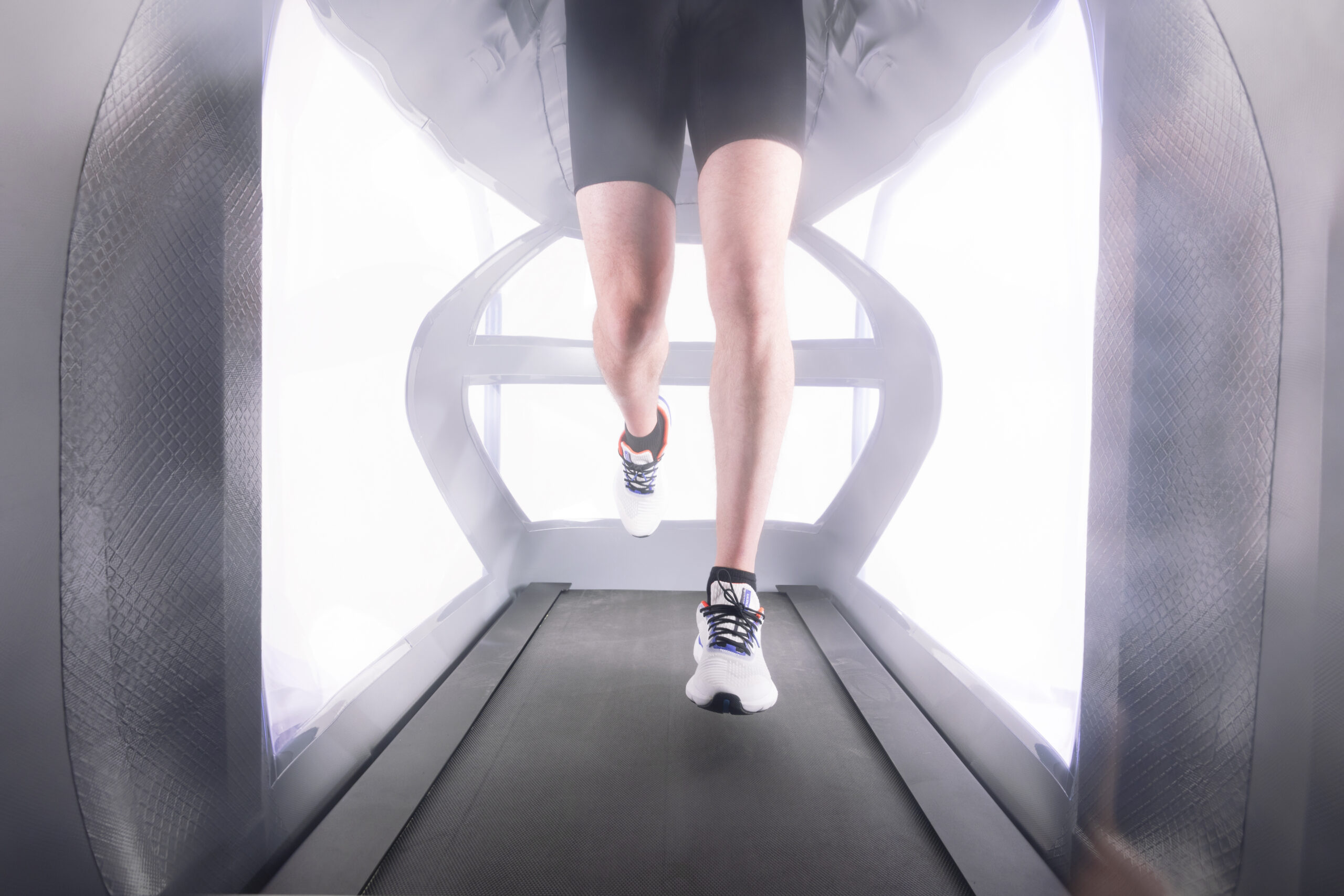
KEEPING YOU MOVING WHILE THE BONE HEALS
A tibial stress fracture is a partial or complete crack in the tibia caused by repetitive loading beyond the bone's capacity to adapt. The standard management involves reducing or stopping running entirely — which protects the fracture but typically leads to significant loss of cardiovascular fitness, running-specific muscle strength, and psychological confidence.
The Anti-Gravity Treadmill changes this equation. By reducing body weight by 40–70%, the ground reaction forces through the tibia are dramatically reduced — often below the threshold that provokes symptoms — while the movement pattern of running is preserved. Runners can maintain their aerobic conditioning and gait mechanics while the fracture heals.
This means a faster and more complete return to full running when the bone is ready — not months of deconditioning followed by a slow, uncertain rebuild.
Always clinically directed: The Anti-Gravity Treadmill protocol for tibial stress fractures must be guided by your physiotherapist. Whether and when walking or running on the treadmill is appropriate depends on the grade and location of the fracture, imaging findings, and symptom response. This is not a self-directed program.
CRITERIA BEFORE RUNNING BEGINS
These criteria should be met before anti-gravity running is introduced.
TIBIAL STRESS FRACTURE PROTOCOL
Four phases from protection through to return to ground running. Timelines are approximate — progression is always symptom-guided.
CLINICAL DECISION RULES
FAQ — TIBIAL STRESS FRACTURE
In many cases, yes — with sufficient body-weight support on the Anti-Gravity Treadmill. The key is reducing the load through the tibia below the threshold that provokes symptoms. Whether this is appropriate for your specific fracture depends on its grade, location, and your symptom response. This needs to be assessed individually — book a free call to discuss.
Pool running maintains cardiovascular fitness but doesn't preserve the specific neuromuscular patterns of land running. The Anti-Gravity Treadmill preserves your actual running gait — meaning when you return to ground running, your body already knows the movement. The transition is significantly easier and faster.
No referral needed. Book a free call and we'll assess your situation and advise on whether this is appropriate for your injury.
DON'T LOSE YOUR FITNESS WHILE YOU HEAL
Book a free call. We'll assess whether the Anti-Gravity Treadmill protocol is appropriate for your stress fracture and build a plan from there.
Book a Free CallNo referral needed · Five Dock, Inner West Sydney · Health fund rebates available