
Achilles Tendinopathy Rehab Sydney
Keep running during Achilles rehabilitation — without provoking flare-ups. Gradually reintroduce load in a controlled, supported environment that bridges the gap between rehab and return to running.
Book a Free Call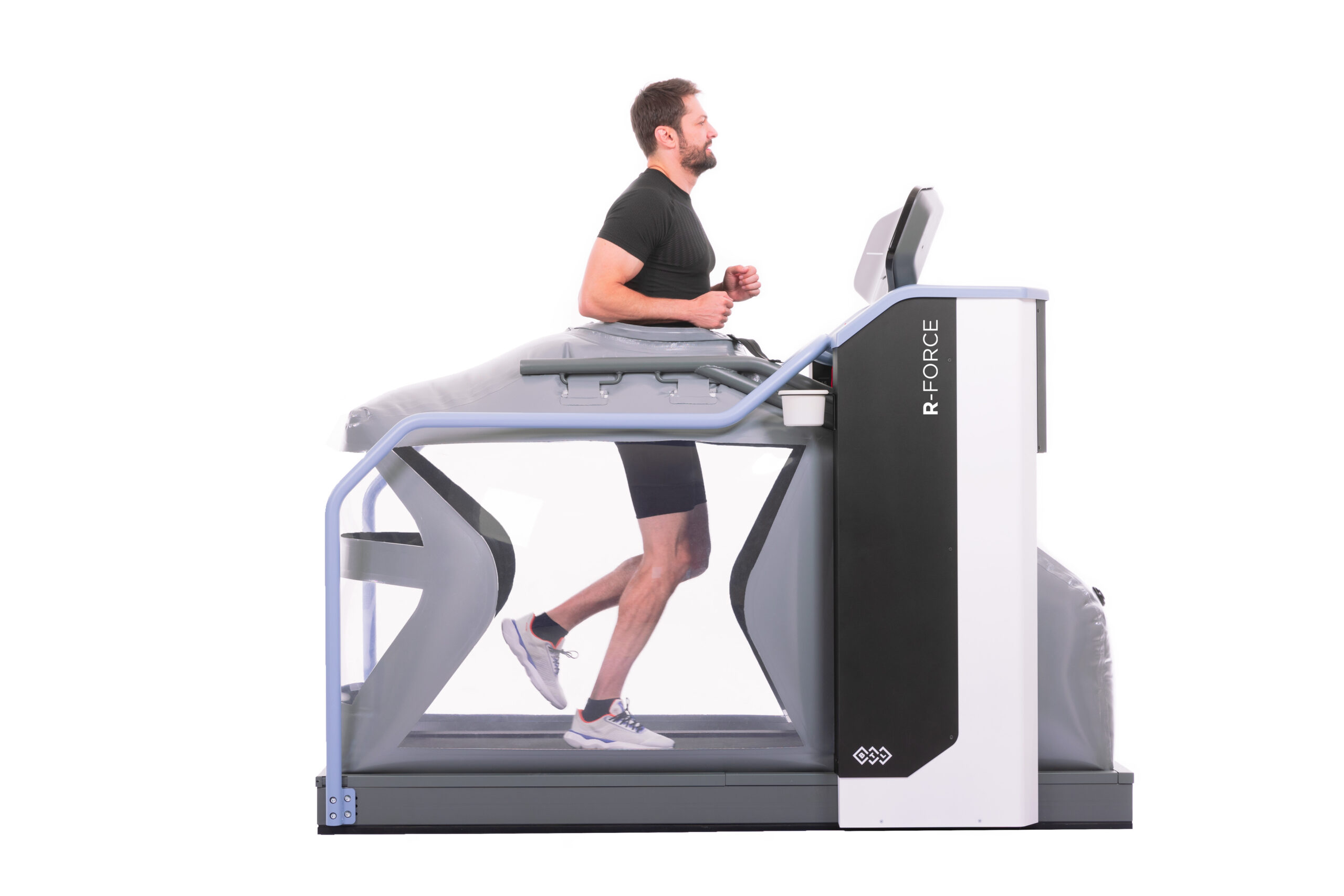
THE LOAD MANAGEMENT PROBLEM
Achilles tendinopathy is a load-sensitive condition. Too much load too soon provokes a flare-up. Too little load for too long fails to build the tissue's capacity and delays recovery. The challenge is threading the needle — enough load to stimulate adaptation, not so much that symptoms worsen.
The Anti-Gravity Treadmill solves this. By reducing body weight, the plantarflexion force through the Achilles during running is significantly reduced — allowing running to be reintroduced at a load the tendon can tolerate, before progressing toward full body-weight running as capacity builds.
The goal isn't to avoid loading the Achilles — it's to control how much load is applied and increase it progressively. The Anti-Gravity Treadmill makes this precision possible in a way that nothing else does.
ACHILLES TENDINOPATHY PROTOCOL
Four phases from supported jog introduction through to full ground running. Each phase progresses duration before reducing support percentage.
CLINICAL DECISION RULES
FAQ — ACHILLES TENDINOPATHY
Complete rest is rarely the answer for Achilles tendinopathy. Tendon tissue requires load to adapt and heal — the challenge is managing how much. The Anti-Gravity Treadmill allows controlled load introduction that avoids the flare-up cycle while building tendon capacity progressively.
The Anti-Gravity Treadmill and a heel raise strengthening program complement each other well. The heel raise program builds the tendon's capacity for loading; the Anti-Gravity Treadmill allows running-specific load to be reintroduced progressively. Both continue concurrently as part of your overall Achilles rehab program.
No referral needed. Book a free call and we'll assess your situation before your first appointment.
STOP THE FLARE-UP CYCLE
Book a free call. We'll build a plan that gets your Achilles tolerating running load again — progressively and without the setbacks.
Book a Free CallNo referral needed · Five Dock, Inner West Sydney · Health fund rebates available